Commentary: Southeast Asia wants to love wind energy but shouldn’t bank on it
SINGAPORE: Tropical Southeast Asia long had plans to harness the power of the winds to propel the next phase of their economic growth.
In 2015, the Association of Southeast Asian Nations (Association of southeast asian nations) fix an ambitious target of securing 23 per cent of its primary energy from renewable sources by 2025 with energy demand projected to abound by 50 per cent.
This was an upgrade to the 9 per cent target set in 2014.
Heed: Tackling climate change through the lens of Singapore'southward young activists | EP 9
Apart from solar, at that place is good reason to think wind energy could make a large part of this mix where in Southeast Asia, coastlines stretch as far as the center can see.
Yet, despite the region's current of air energy potential being immense, nations accept been slow to harness this wealth of clean energy. Instead, piecemeal wind projects sprouting across Southeast Asia take come to dot the mural.
Experts take estimated that Vietnam has, for instance, has a 309 gigawatts (GW) technical potential for offshore air current. All the same, it is only targeting 6GW to be supplied by 2030 – less than 2 per cent of its potential.
READ: Giant offshore wind turbines could help Vietnam tackle immense climate change challenges
FUNDING THE WIND REVOLUTION
Part of the hesitance stems from wind energy projects remaining an expensive proposition where most Southeast Asian countries have access to cheaper energy sources. Indonesia, for case, is the world'south largest exporter of coal and can also tap on geothermal energy, being situated in the volcanic Ring of Fire.
Current of air energy projects can cost anywhere between US$1.4 million for a 800 kilowatt projection and up to US$4.2million for a 3.5 megawatt (MW) project for the air current turbines, ecology works prior to commissioning, the distribution filigree gear up-upwardly and transportation to the projection site.
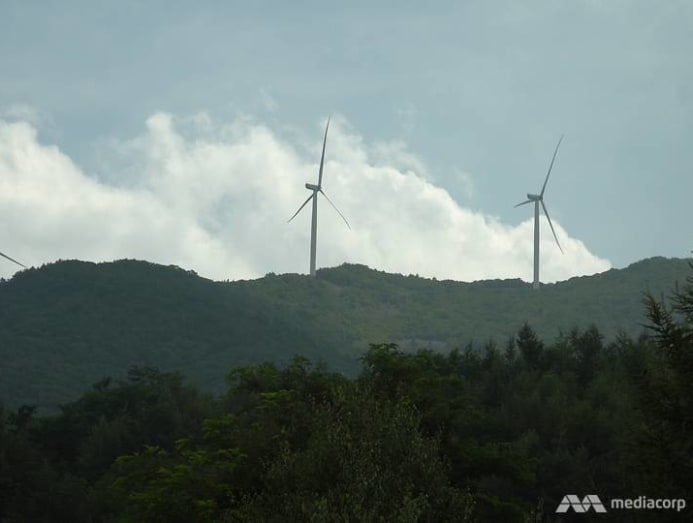
A iii.v MW solar project would cost but half as much, and will cost less over the years equally solar panels get cheaper.
Southeast Asia is expecting 100 million more than people from 615 one thousand thousand in 2022 to 715 million in 2025, according to an ASEAN Centre for Free energy study.
Leveraging make clean energy can exist a good way for Association of southeast asian nations countries to meet their Nationally Determined Contributions (NDCs) towards global climate action while supporting this rising middle class, without which the region'due south power generation-related carbon emissions could increase past 84 per cent by 2025.
READ: Commentary: India on dream run in meeting renewable energy goals
Countries in this region already accept a renewable free energy portfolio dominated by solar energy and hydropower, and are demonstrating leadership in setting audacious aims for make clean free energy.
Indonesia has committed to reduce its emissions by 30 per cent from 2005 levels and to source 30 per cent of its energy from renewable sources past 2030 for instance.
The boom in infrastructure financing in Southeast Asia might provide some lift. Banks, who accept a critical role in climate change mitigation, come across a huge opportunity in financing renewable energy projects in ASEAN.
READ: Commentary: Forces of climate action are reshaping finance in Singapore and around the earth
Within ASEAN, green financing supply is expected to hit The states$twoscore billion by 2030. Sustainability and the Un' Sustainable Development Goals (SDGs)-linked loans and light-green bonds have been gaining traction over the last couple of years in Southeast Asia.
Singapore banking company DBS has already financed three solar energy projects, one geothermal free energy project and two air current energy projects to date.
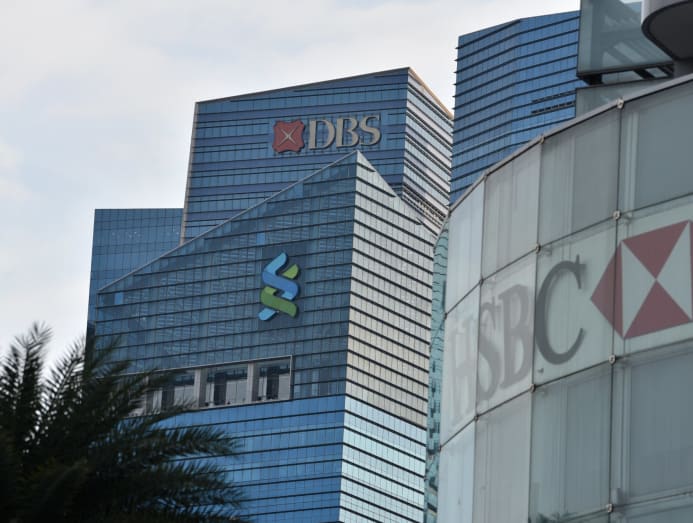
With regulatory agencies similar the Budgetary Authority of Singapore shifting towards the rollout of financial institutions guidelines on sustainable financing, projects in clean free energy every bit a whole may come across a elevator.
Every bit new long-tenor debt securitisation instruments and bail markets mushroom to requite institutional investors a share of this new pie, funding may also be less of an outcome.
READ: Singapore launches showtime establish defended to dark-green finance research and talent development
THE Contend OVER OFFSHORE AND INLAND WIND TURBINES
Of course wind energy is not for every Southeast Asian country, not to the lowest degree the archipelagic states similar Indonesia and the Philippines with fragmented electricity grids that require laying underwater cables to connect islands to gridlines which volition impose additional fiscal costs and risks environmental degradation.
Different conventional forms of power generation such equally coal, solar and wind energy are best captured in areas abroad from obstructions like buildings. Islands that are not inhabited are good areas to capture stiff solar and wind intensities.
However, as they are fragmented from city centres, they do not have directly access to national grid systems to transmit the energy captured.
READ: Commentary: The world is hungry for light-green cooling solutions. Thankfully, Singapore is pioneering them
READ: Commentary: Air-conditioning – the unspoken energy guzzler in Singapore
The greater worry is if inland turbines generate backlash from communities living in close proximity, in the same way Germans vicious out of beloved when these towering 200m fans created an eyesore for residents.
Offshore turbines may be a better solution to take the political sting out of clean free energy A unmarried 6 MW floating wind turbine tin generate enough electricity to power about four,000 homes.
Only these are expensive to install, susceptible to damages during storms and typhoons, and could affect marine life.
Additionally, wind turbines have a lifespan of 15 to twenty years, whereas a natural gas establish tin last 30 to 40 years. To build and decommission a i GW fixed-bottom air current turbine will cost approximately US$1.2 billion across a 25-year lifespan excluding yearly performance and maintenance costs of about US$100 million.
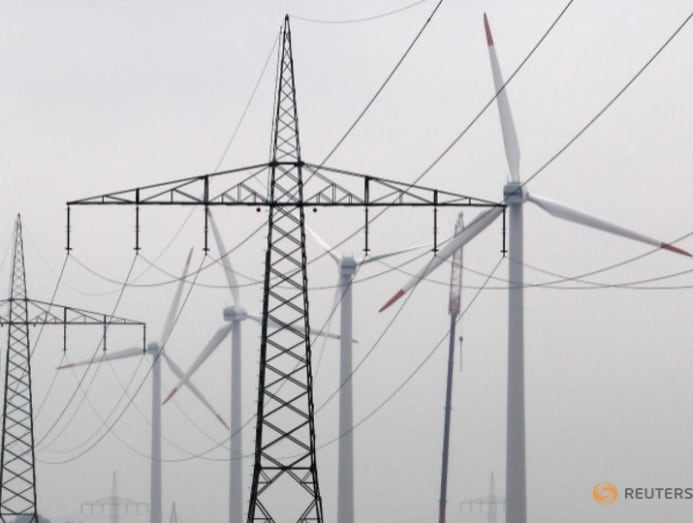
All these make the pursuit of wind energy wait unattractive when dirty energy alternatives are cheaper and more abundant. Even solar looks like a meliorate deal.
Green SHOOTS
While notwithstanding in the early stages of implementation, contempo projects have shown promise for floating current of air turbines in Asia.
A 100-hectare wind energy farm in Sidrap, the region's largest, was simply recently inaugurated by President Joko Widodo in 2016.
Though it tin can only generate a modest 75 MW, a miniscule amount compared to Indonesia's projected additional 35,000 MW target in that v-year period, the projection has been seen as a milestone in the country's efforts to seriously develop wind energy.
READ: Commentary: Indonesia's clean energy ambitions hit fresh obstacles
Vietnam emerges as a more avant-garde player in this field. The country has 14.7 GW of current of air energy capacity either in operation or in the pipeline – with experts estimating this could double by 2030.
The adoption of current of air energy too offers articulate environmental, economic and social benefits, including job creation, reducing air pollution and tackling climatic change.
A prime number instance of this is the 54 MW Pililla air current project in the Philippines completed in 2019. Before the coronavirus, the projection drew thirteen,000 visitors.
It likewise provides nearly 130,800 households with energy while reducing 110,000 tonnes of greenhouse gas emissions and saving about 130 million litres of h2o yearly.
READ: Commentary: India on dream run in meeting renewable energy goals
THE PROSPECTS FOR Air current Energy
There is trivial reason why Southeast Asia cannot catalyse greater investments in these areas to promote attract private sector funding, noesis-sharing and smart solutions will support this march towards a clean and secure free energy future for Southeast Asia.
While much has been said about the prospects of air current energy in Southeast Asia, a more realistic scenario is for each country to pick a mix of renewable energy sources combined with grid infrastructure reinforcements and technological innovation that go along footstep with their energy needs, geographical strengths and cost concerns.
Kavickumar Muruganathan is a sustainability and supply chain professional in the renewable energy sector. He is also a lecturer at Stomach Asia.
Source: https://cnalifestyle.channelnewsasia.com/commentary/commentary-southeast-asia-wants-love-wind-energy-shouldnt-bank-it-294691
0 Response to "Commentary: Southeast Asia wants to love wind energy but shouldn’t bank on it"
Postar um comentário