what do i need to add to my privacy policy for gdpr

Do you desire to make a WordPress privacy policy page?
Maybe you've heard of GDPR lately, a European regulation to protect the privacy of Eu residents, and want to create a GDPR-compliant privacy find on your website. In fact, many advertising programs, like Google Adsense, ask the participating websites to include a privacy policy page on their websites.
In this commodity, we'll prove you lot how to add a privacy policy page in WordPress.
Disclaimer: We are not lawyers. Zilch on this website should be considered legal advice.
What Is a Privacy Policy Page?
A privacy policy page is a statement from yous, disclosing the information you lot collect on your website most visitors. This includes information you collect through cookies, registration, comments, subscription forms, etc. Unremarkably, site owners collect this information by installing web analytics software such every bit Google Analytics, or stats counters. Users also voluntarily provide data by filling out their information in comments, registration, and subscription forms.
A privacy policy page is also a argument disclosing how you lot use this information. For instance, website owners serving advertisements through 3rd-party websites, are usually sharing this information with their advertising partners. If you are building an email list, then you need to ensure users that their email addresses will non be sold or shared with any third-party websites.
Do You Demand to Create a Privacy Policy Page on Your Website?
In many countries (including the The states), websites are required by police force to disclose the information they collect near their visitors and how this data is used.
Additionally, the European union's General Information Protection Regulation (GDPR) takes effect on May 25, 2018. This regulation requires website owners like you to be transparent virtually how you collect, use, and share personal data of Eu residents no matter where your business is located. If your business concern isn't in compliance with GDPR requirement, then y'all may face large fines upwardly to iv% of the company's annual global revenue OR €20 million (whichever is greater).
Some means a typical WordPress website collects user information are:
WordPress comments: If commenting is enabled on your site, you're as well collecting personal data like proper noun and email address of your users. Later commenting on a website, personal information is also saved in browser cookies, and then commenters don't have to resubmit them next time. This makes commenting more convenient on WordPress websites.
Google Analytics: If you employ Google Analytics on WordPress site to rails user interactions, chances are you're collecting personal data similar IP addresses, user IDs, and cookies for behavior profiling.
Contact forms: If you shop contact form entries in WordPress or use the data for marketing purposes, y'all might want to get explicit consent from users to do so.
Advertising: If you serve advertisements through third party websites, like Google AdSense, then y'all're likely sharing user behavioral information with your advertising partners.
That means if you lot're running a website, then, most likely, you're too collecting some personal data of your users. As you're collecting user data, it goes without saying that you lot need to have a privacy policy folio published on your website. It protects your business concern from legal issues and as well helps foster user trust.
Now that you know why you need a privacy policy folio on your website, it's worth taking a moment to learn about GDPR and how to make your website compliant with it.
What Is GDPR Regulation?
The General Information Protection Regulation (GDPR) is a European Union (EU) law, which takes effect on May 25, 2018. It requires companies and site owners to reveal how they collect, employ, and share personal data of their users. The goal is to give European union citizens more access and choice when it comes to how their own personal data is collected, used, and shared.
Keep in mind that while GDPR is a European regulation, it's applicable to all websites and online businesses effectually the globe that collect, store, and procedure personal information about EU residents no affair where the business organisation is located.
Of form, this law applies to you every bit well if your site attracts visitors from European Spousal relationship countries.
For more than details, check out the ultimate guide to WordPress and GDPR compliance.
What Should Y'all Include in a Privacy Policy Folio?
A unproblematic WordPress privacy policy folio should contain this information:
- The details about the data you collect on your site.
- Explain how you collect the data. For instance, it could be through site logs, cookies, web beacons, signup/registration forms, comment forms, etc.
- If you use third-party ad networks like Google AdSense, you may too be serving cookies and web beacons on your website to serve targeted ads.
- Explain why y'all collect this information. This could be for improving your website, improving user experience, etc.
- Explain if your users could opt-out of these cookies. If so, and then you might add together the links to opt-out pages on your site and third-party advertiser websites.
- Finally, tell your users how they should contact you if they have whatsoever questions or concerns regarding the privacy policy.
You can detect dozens of WordPress privacy policy generator or templates that let you lot easily create a WordPress privacy policy page. All you have to do is enter your own site name, business name and other details. While a privacy policy template or generator gives you a head first for creating a privacy notice, you might also enhance information technology by providing more details most data usage past dissimilar plugins yous apply.
WordPress four.nine.6 comes bundled with a privacy policy generator, which allows you to speedily create a privacy policy page on your website. Before you dive in, you can check out our privacy policy page for inspiration.
When yous're ready, follow our step-by-stride guide to create a privacy policy page on your site.
How to Create a GDPR Compliant Privacy Notice (Step by Step)
Footstep 1: Update Your WordPress
WordPress 4.9.6 is a privacy and maintenance release that comes bundled with a privacy policy generator. It encourages you to update your sites to take reward of the new privacy features.
If you're using an older version of WordPress on your site, make sure to update your WordPress core files before you brainstorm.
Below are a few new features of WordPress that y'all'll find useful to make your website compliant with international laws including GDPR.
The Privacy Policy Page Generator
Rapidly build a privacy policy page past navigating to Settings » Privacy. (We'll explain more on this in the adjacent step)
WordPress Comments
By default, personal details similar proper name and email address volition no longer exist saved in browser cookies. Users are given a choice whether they want to save the data in a browser cookie for convenient commenting.
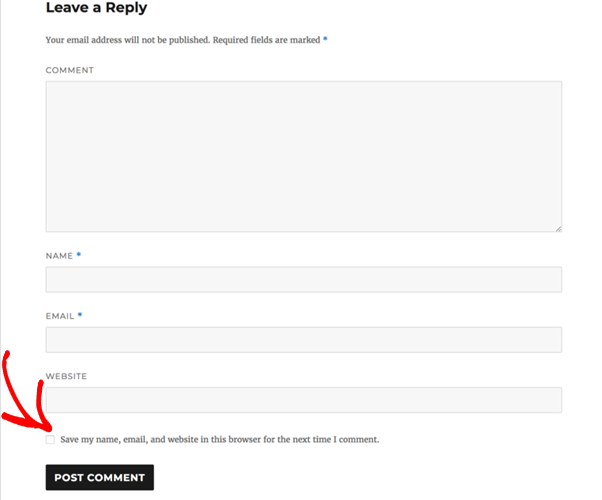
Information Handling
Site owners can now export a zip file containing users' personal data, including the information nerveless by WordPress and participating plugins. You tin also erase personal data of private users.
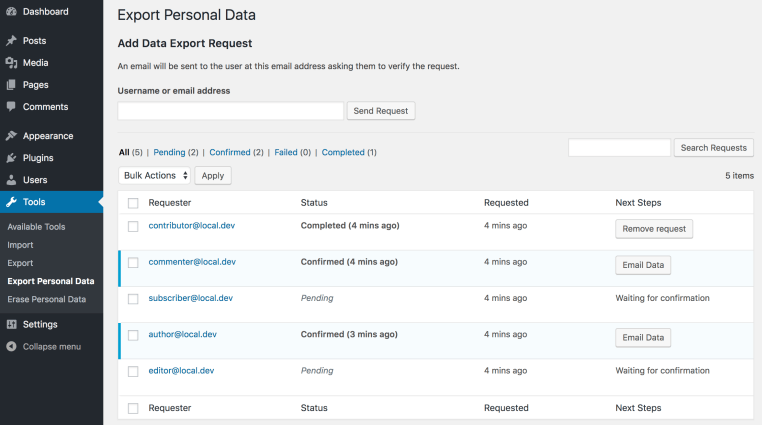
Step ii: Create a Privacy Policy Page
You lot can create a privacy policy page in 2 ways: either by using the default WordPress privacy policy generator or by using a plugin such as Machine Terms of Service and Privacy Policy.
If you want to use the default privacy policy generator, navigate to Settings » Privacy. You can now select an existing folio or create a new page to display your privacy policy.
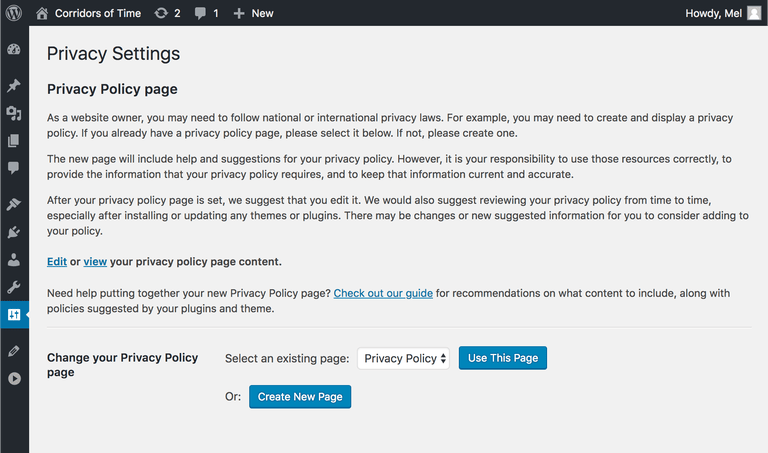
If you want to create a new privacy policy page, then simply click on Create New Page. This will automatically generate a privacy policy template on your new page.
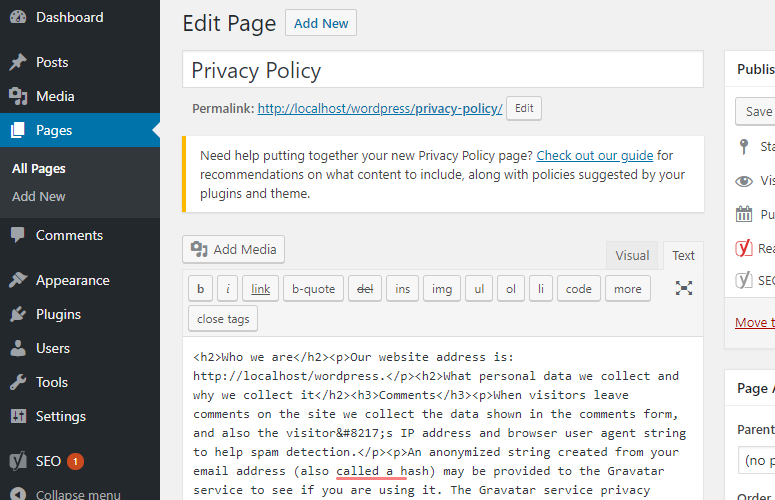
The new page will include help with suggestions for your privacy policy. However, it is your sole responsibility to provide the information that your privacy policy requires, and to keep that data current and accurate.
The privacy policy page comprises several sections including:
- Who we are: In this section, your website URL is specified automatically. Yous'll take to add together any additional information you want to display on your ain.
- What personal data we collect and why nosotros collect it: In this section, y'all can notice several subsections such every bit comments, media, contact forms, cookies, embedded content from other websites, and analytics.
- Where we send your data
- And a lot more.
Step three: Empathize What Data You Collect on Your WordPress Website
Now that you've built a bones WordPress privacy policy page, the next thing you need to do is enhance your privacy policy by providing more information it requires.
Past default, the WordPress privacy policy generator explains what personal data the WordPress core software collects on your website and why it collects it. For example, y'all tin find the data usage policy for WordPress comments, media, cookies, and embedded content in your newly-created privacy policy.
Similarly, you'll have to write what other information your website collects through your WordPress theme, plugins, and third-party services you lot use on your website.
The data you collect on each website may vary based on the WordPress plugins and tools you use. However, beneath are a few essential data usage policies you'll need to explain on your WordPress website no affair what plugins you utilise.
- Analytics information usage policy
- Contact forms data usage policy
- Ads data usage policy
Stride 4: Raise Your Privacy Policy by Providing More Details on Information Usage
Now y'all accept an idea of what information your website collects through your WordPress plugins and third-party tools. In order to stay GDPR-compliant, it's recommended to use WordPress plugins and tools that are compliant with GDPR.
Allow's take a detailed wait at how to remain GDPR compliant while using Google Analytics, contact forms, and Google AdSense ads on your website. Nosotros'll also explain what information you lot demand to include in your privacy policy in each example.
Google Analytics
If you're similar about website owners, and so y'all're likely using Google Analytics to track and collect user interactions on your website. For behavior profiling, Google Analytics extensively collects personal information including IP addresses, user IDs, and cookies.
To be GDPR compliant, y'all need to do one of the following:
- Anonymize the data earlier storage and processing begins
- Add together an overlay to the site that gives discover of cookies and ask users for consent prior to tracking
Both of these are difficult to implement if you lot're non an Analytics adept or a WordPress developer. And this is why we always recommend you to install Google Analytics through a plugin rather than transmission installation.
If you lot're using MonsterInsights, the all-time Google Analytics plugin for WordPress, it's easy to stay GDPR-compliant. All yous have to do is install the EU compliance addon that helps automate the above process. Once you lot installed the addon, you'll exist given a choice to anonymize IP addresses, disable UserID tracking, disable writer tracking, etc.
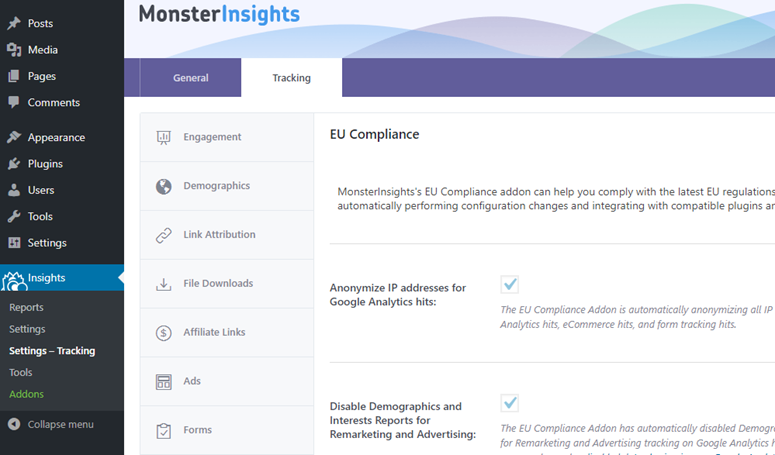
For more details, refer to this GDPR and MonsterInsights article.
Based on the options you lot choose, in your privacy policy page, you may want to explain how you remain compliant with international laws when it comes to Analytics information usage.
Contact Forms
If yous are using a contact grade on your WordPress site, and store the class entries or use the data for marketing purposes, and so you may want to add actress transparency measures on your site.
A few ways to remain compliant with international laws, including GDPR, when it comes to using your WordPress forms are:
- Get explicit consent from users to store their data and use them for marketing purposes.
- Disable cookies, user-amanuensis, and IP tracking for forms.
- If you are using a SaaS grade solution, and so make sure y'all have a data-processing agreement with your form providers.
To make your WordPress forms GDPR-compliant, merely adding a required consent checkbox with clear explanation should exist good enough.
With WPForms, the easiest contact class WordPress plugin, you lot can easily add a GDPR consent field on your forms. You can also disable user cookies, disable user IP collection, and disable entries with a single click.
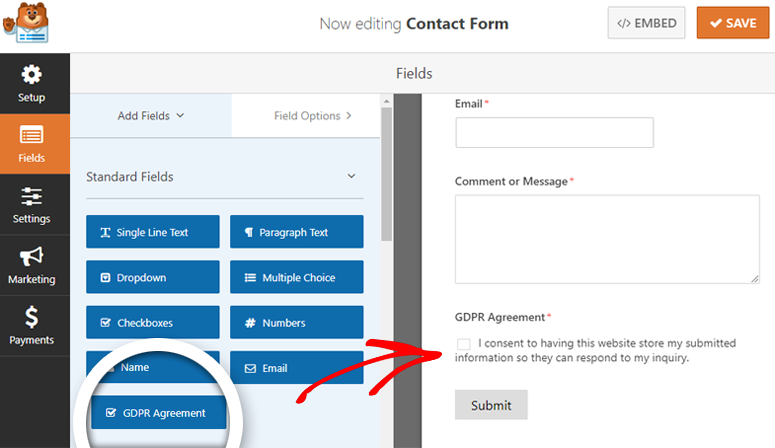
In your privacy policy, y'all may besides want to explicate how you remain compliant with international laws when it comes to information collection and usage with your contact forms.
Advertizement
If you're serving ads using third-political party advertizing networks like Google AdSense, you might want to go users consents of the use of cookies and/or web beacons to collect data in the ad serving process.
You can do this by using a plugin similar Cookie Notice.
Check out our article on best GDPR plugins for WordPress
Pace 4: Add a Link to Your Privacy Policy Folio in WordPress
You can add together a link to your privacy policy past editing the footer surface area of your WordPress website. If you have a widget area in the footer of your theme, then yous can elevate and drop a text widget to add a link to your privacy policy.
Alternatively, you tin also create a new menu by visitingAppearance » Menus. Add links to your about, contact, terms and conditions, and privacy policy pages in this menu and then salve it.
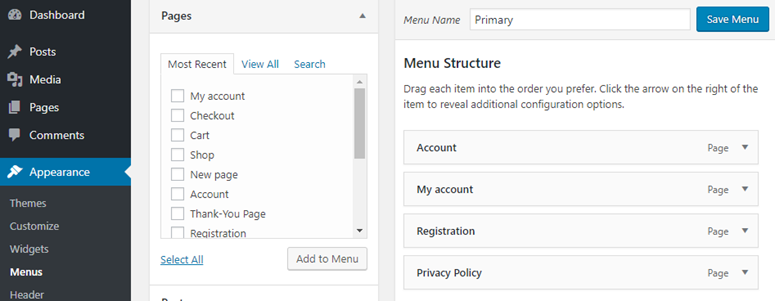
Then, head over toAdvent » Widgets and drag and drop the Custom Bill of fare widgets to your footer sidebar. Select the carte du jour you just created and salve your widget.
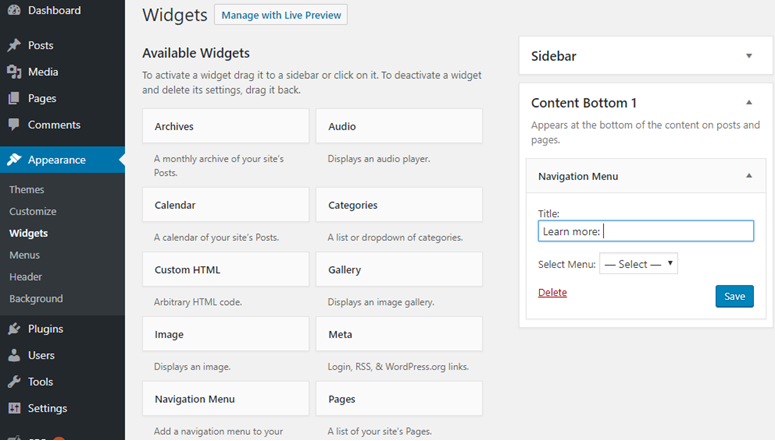
That'due south it!
We hope this guide helped yous create a WordPress privacy policy page, which will come handy when y'all are starting your website or edifice your blog.
You may also cheque out our guide on the all-time Google Analytics plugins for WordPress.
Source: https://www.isitwp.com/how-to-make-a-wordpress-privacy-policy/
0 Response to "what do i need to add to my privacy policy for gdpr"
Postar um comentário