If the Red Liquid That Oozes Out of Beef Isnt Blood What Is It
Why is meat blood-red? Ask only about anyone and they'll tell y'all it's residuum claret within the meat.
Merely what if I told you that this ruby-red hue, as well equally the crimson-colored juice that oozes out when you slice into your meat, isn't actually blood at all?
Let's accept an in-depth expect at why ruby-red meat is actually blood-red, and how this tin can modify during cooking.
Why is meat crimson?
When y'all remove your meat from its packaging, the chances are that you'll notice a rest of a red-colored liquid that yous may understandably mistake for blood.
In fact, this is really a mixture of water (fresh meat contains around 70% water), and a bright ruddy poly peptide known as myoglobin that gives red meat its striking color.
What is myoglobin paint?
Myoglobin is a poly peptide that binds oxygen and iron. It is institute in the muscle tissue of nearly all mammals, where it stores oxygen for use by muscles that are in abiding or very frequent use.
Different types and cuts of meat will contain unlike levels of myoglobin. Myoglobin contains a pigment called 'heme', which gives meat its red color.

- Meat with a higher myoglobin content will exist naturally redder than meat with low levels. For instance, beef has loftier levels of myoglobin, pork and lamb have lower amounts and poultry has the least.
- Cuts of meat from older animals are more than likely to contain higher amounts of myoglobin than younger ones, hence why veal is a lot lighter than beef.
- Hard-working muscles that are used for walking and running, such as shoulder and rump, comprise more than myoglobin, and therefore, are likely to exist a darker red than muscles that are used for postural back up, such equally beef tenderloin.
Still, in raw meat, myoglobin pigments will differ in color depending upon their exposure to oxygen. When in that location is no oxygen exposure, such as in a vacuum-packed steak, the meat appears nighttime, with an almost purple hue.
When your cutting of meat has been exposed to oxygen, it volition appear brilliant red, like the meat y'all meet on display at retailers, pre-cut for sale.
Brown or tan-colored meat can indicate one of two things. Either a low oxygen presence or that the meat is several days quondam. After a few days, the fe in the pigment becomes oxidized, creating what is called metmyoglobin.
While usually, the change of colour itself does not indicate that your steak has gone bad (provided it is within date), one time meat'southward myoglobin has go metmyoglobin, consumers tend to find it visually off-putting and condone it equally past its best.
Steak OXIDATION Experiment! SURPRISING RESULTS!!!
How myoglobin changes color during cooking
Myoglobin also changes colour throughout the cooking process. Oxygenated myoglobin is red, but as yous melt your meat, this changes to a gray-chocolate-brown color.
Rare cooked beef retains much of its scarlet color; however, once y'all heat your steak to higher up 140 degrees, the myoglobin loses its power to bind with oxygen and its atomic number 26 atom loses an electron. This leads to the formation of a stake brown compound known as hemichrome, which gives medium-cooked beef its light tan color.
When you lot heat your meat up to higher temperatures higher up 170 degrees, hemichrome levels rise further, and the myoglobin turns into denatured metmyoglobin. This is what gives well-done meat its dark brown appearance.

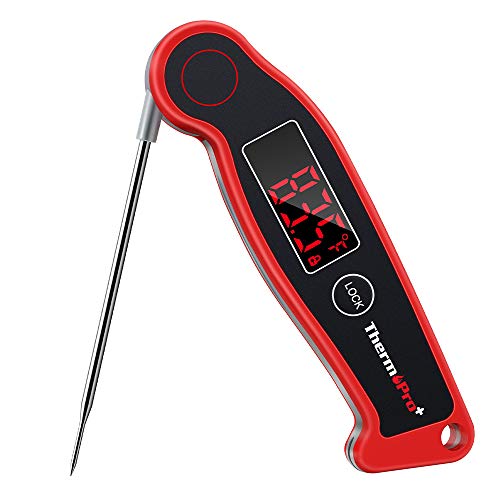
While these colour changes are the event of temperature increases, it must exist said that a meat thermometer is the nearly reliable style of ensuring that your meat is cooked through.
While most whole muscle meat will melt every bit stated in a higher place, it is possible that your meat could color slightly differently depending upon the state of its iron content and the presence of oxygen.
For example, premature browning can occur with beef patties that announced fully cooked through; nevertheless, when tested with a thermometer, prove to exist undercooked.
This may occur when the meat has already oxidized, and the myoglobin has changed to metmyoglobin, as nosotros discussed earlier. So, you tin can take meat that is brown in appearance but actually undercooked in reality.
On the other mitt, you may experience "persistent pink", where certain sections of meat remain pink in color fifty-fifty when fully cooked. This can occur in meat with a very high myoglobin count when not all of it breaks downwardly.
You can also find a like pink shade in cured meats that take sodium nitrite added for preservation and flavor, for case, hams, hot dogs and bacon. In this case, the nitrite reacts with the myoglobin to become a bright red nitrosomyoglobin.
Upon heating, this vivid color fades to a pink shade, as it converts into a chemical compound known as nitroso hemochrome.
And then, while the myoglobin color changes in cooked meat are generally a good indicator of doneness, you lot need a meat thermometer to check that your meat is cooked as required accurately.
The Right Way to Use a Meat Thermometer
Red meat vs white meat
When we remember well-nigh the dissimilar types of meat that nosotros eat, we tend to split up them upwards into categories of cerise and white meat based upon their general advent.
Permit's take a closer look at some of the main differences.
Red meat
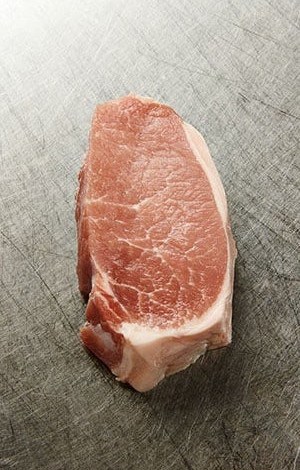
Traditionally the term 'red meat' is used to refer to beef and some cuts of lamb and pork, although the latter may also occasionally be classed as white meat.
To avoid confusion, it is helpful to look at the individual cuts of meat and determine which function of the animal they are from.
Essentially, meat is musculus. Some muscles are developed to perform more intensive, endurance activities than others.
This requires greater amounts of oxygen, hence why these muscles, in particular, have high levels of myoglobin. This extra oxygen storage and supply capacity let these so-chosen "long twitch" muscles to carry out almost-constant activities, with a loftier level of endurance.
Myoglobin, equally nosotros know, is a highly pigmented protein that gives cherry meat its red color. The more myoglobin in the muscles, the darker the meat will be in color.
All animals take some levels of myoglobin, fifty-fifty those that are typically classed as white meat. For example, low amounts of myoglobin are found in the muscles for the wing area of wild birds that fly long distances, or in the leg muscles of grounded birds such as craven or turkey.
In these cases, though, meat tends to be classed equally 'dark meat' rather than red meat.
White meat
White meat usually means poultry, especially chicken or turkey.
Some people may refer to pork equally white meat, although it tin also exist classed equally red. White meat, dissimilar red meat, contains "fast-twitch" fibers.
This ways that the meat comes from muscles that are used specifically for quick bursts of activeness, rather than endurance ones, like those seen in ruby meat.
As these muscles are developed for these quick free energy bursts, they do not demand stores of oxygen in the form of myoglobin. Instead, they rely upon glycogen, a form of master carbohydrate storage that is very speedily mobilized when needed, and therefore, ideal for "fast-twitch" fibers.
When raw, white meat has a translucent advent that becomes opaque and then white when cooked. Equally mentioned previously, there are certain cuts of poultry that are, in fact, dark meat.

A good example is to compare chicken breasts to legs. The breasts are classed as light meat and the legs, dark meat.
So, while y'all can find myoglobin in both white and red meats, information technology is its high concentration in beef, and to a lesser extent, lamb and pork, that gives ruby-red meat its color.
Hardworking, endurance muscles in poultry, such equally leg meat, as well contain small amounts of myoglobin; nonetheless, this is not enough to modify the color to the same shade as beef.
Tricks supermarkets use to make meat look fresher
Fresh meat is bright red and this color is mostly considered more appetizing than brown-tinted meat.
If you're out grocery shopping for the week, you're not going to want to purchase a steak that looks like information technology's just got another day'southward shelf life. Therefore, it'south no wonder retailers are so keen to preserve their meat's fresh, red tinge for as long as possible.
In gild to stop myoglobin from oxidizing with the air, some retailers use carbon monoxide or dioxide gas to bond with the myoglobin and prevent it from going brown.
This process is known equally "Modified Atmosphere Packaging" or "MAP". While MAP will keep meat looking red for a considerable corporeality of time, it does not foreclose it from going off.
This can be extremely deceptive, as meat that was potentially butchered weeks ago will still look fresh. Therefore, if you lot want to brand sure your meat is as fresh as can be, it'south best to get it straight from your local butcher.
How to Tell If Beef Is Spoiled
Wrapping it up
Meat is reddish because it contains myoglobin, a protein that is highly pigmented and used to shop oxygen for long-fiber muscles that are in near-constant use.
So, next fourth dimension yous experience grossed out, recollect that the red juice oozing out of your steak and left backside in the packaging isn't blood, it's but a mix of water and myoglobin!
What do yous retrieve? Has this article surprised you? Be certain to share this knowledge with your friends, and if you have whatsoever questions, leave the states a comment below!
Source: https://www.smokedbbqsource.com/why-meat-is-red/
0 Response to "If the Red Liquid That Oozes Out of Beef Isnt Blood What Is It"
Postar um comentário