What Food Chain Is Recalling Beef for Metal Shavings
Metals and Your Nutrient
Spotlight
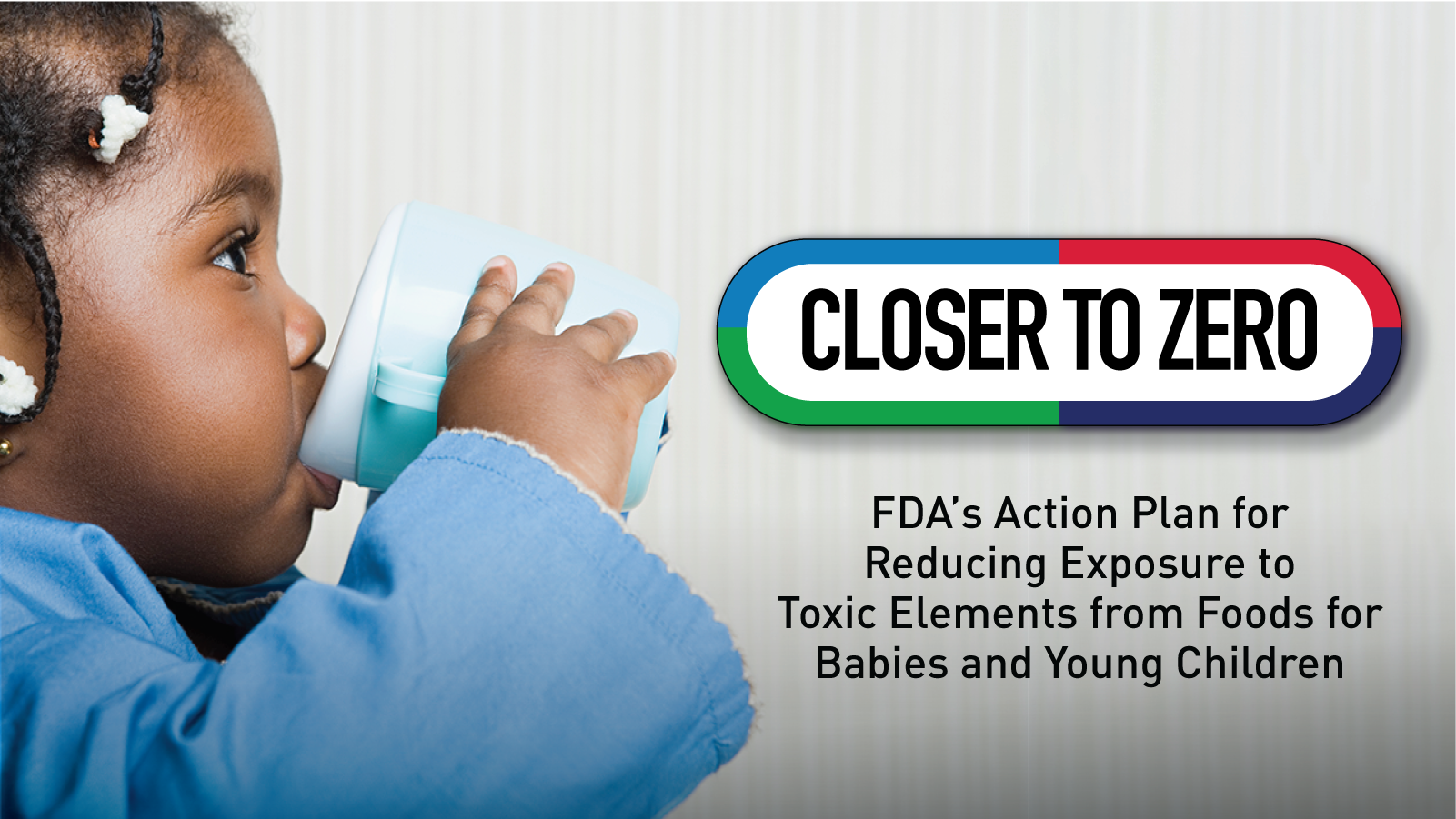
The U.S. Food and Drug Administration's (FDA) plan, Closer to Zero, identifies actions the agency volition take to reduce exposure to toxic elements from foods eaten by babies and young children—to as low every bit possible. Learn more nearly FDA'south Action Program.
Metals, like other naturally occurring elements, enter our nutrient supply through our air, water and soil. The levels constitute in nutrient depend on many factors, including:
- the levels of these elements in the air, h2o and soil used to grow the crops, which vary depending on factors such as natural geographical differences and past or current contamination,
- the type of the food crop and how much "uptake" there is of specific elements from the environment, and
- industrial, manufacturing, and agricultural processes.
In addition, some metals that are beneficial to health, such as iron, are intentionally added to certain foods, including breakfast cereals and infant formulas, to raise their dietary benefits.
The properties of specific metals, the amount of intake, and a person's historic period and developmental phase are all key factors that help determine how a metal affects private health. Understanding the risk that harmful metals pose in our food supply is complicated past the fact that exposure to metals comes from many unlike foods. Combining all of the foods we eat, fifty-fifty low levels of harmful metals from individual food sources, can sometimes add upward to a level of business organisation.
To help protect the safe of the food supply, the FDA monitors, tests, and sets standards for metals in foods, animal feed and in cosmetics. When the level of metals is determined to be dangerous, the FDA uses its authorisation to take action on a instance-past-case basis.
For information on health risks, FDA regulations and guidance to industry, FDA monitoring and testing, and consumer resources please visit the arsenic, pb and mercury webpages, and Closer to Zero, our action programme to address toxic elements in foods eaten by babies and young children.
FDA's Toxic Elements Working Group
The bureau's Toxic Elements Working Group (TEWG) aims to reduce exposure to toxic elements in food, cosmetics and dietary supplements. The group is made up of senior leaders and risk managers in the Center for Food Safe and Applied Diet (CFSAN) with experience in microbiology, toxicology, chemistry, medicine, epidemiology, policy and law. Working with scientists across the Center, the group is tackling the issues presented by metals using the following approach:
-
Prioritizing metals past toxicity and prevalence – The group is looking at the presence of metals in all products CFSAN regulates and identifying the areas where the FDA tin can take the greatest impact on reducing exposures. The workgroup is focusing first on: atomic number 82, arsenic, cadmium, and mercury in foods, cosmetics, and dietary supplements, because high levels of exposure to those metals are likely to take the well-nigh significant affect on public health.
Essential to prioritization is studying the large amount of information we have nerveless over the years. The FDA has been collecting information on contaminants and nutrients in foods for decades as part of its Full Diet Study. The written report routinely samples products found in grocery stores from across the country, testing them for hundreds of contaminants, including these metals. These data are important because they can help us amend empathise how consumers are exposed to these contaminants.
-
Identifying most vulnerable populations – People vulnerable to the harmful furnishings of metals in food include infants and children, the elderly, and consumers who may take chronic wellness conditions. Every bit the bureau works to reduce consumer exposure to metals through foods and other products, we are paying special attention to children considering their smaller body sizes and metabolism may make them more susceptible to the harmful effects of these metals. Of detail concern is the issue these metals have on children'south neurological development.
In 2020, the FDA released Closer to Goose egg, the agency'south action program for reducing toxic elements (metals) in the foods eaten by babies and young children.
- Determining effective ways to reduce exposure –The FDA is committed to using the best available science to inform and support policy decisions on toxic metals. FDA will consider a wide range of policies and actions to reduce exposure, ranging from requiring or encouraging industry to take steps to reduce the presence of the metals in products to educating consumers nigh ways they can reduce the risks posed by these metals.
More on the TEWG tin be found on What FDA is Doing to Protect Consumers from Toxic Metals in Foods.
FDA's Monitoring and Testing of Metals and Other Elements
The FDA monitors levels of metals and other elements in food and nutrient contact surfaces to inform and enforce FDA rules and guidance. The FDA tests for metals and other elements through the Full Diet Study; the FDA'due south Toxic Elements in Nutrient and Foodware; and Radionuclides in Food compliance program; and through targeted sampling assignments. Sampling assignments may exist conducted in response to reports of elevated levels of toxic metals or other elements in certain foods or to focus on a specific food, food additive, or specific nutrient group (such every bit foods commonly eaten past infants and toddlers).
Metals Tested for in FDA'due south Total Diet Study
| Metals with Daily Intake Requirements | Metals that are Harmful to Health |
| Calcium, Chromium, Copper, Atomic number 26, Magnesium, Manganese, Molybdenum, Potassium, Sodium, Zinc | Aluminum*, Antimony*, Arsenic, Barium*, Glucinium*, Cadmium, Pb, Mercury, Silvery*, Strontium, Nickel, Thallium*, Uranium, Vanadium *Tested in bottled drinking water only |
For more than data most monitoring of specific toxic elements, please visit FDA's webpages on arsenic, lead and mercury.
International Scientific Activities
FDA experts participate in the international standard-setting body, Codex Alimentarius Commission (Codex). The purpose of Codex is to protect the health of consumers and promote fair trade practices past adopting scientifically based standards, guidelines, and codes of practice across all areas of nutrient safety and quality. Its work includes reviewing the scientific data concerning arsenic and other contaminant levels in foods. These international discussions can lead to recommendations for standards individual countries may prefer and codes of practice to prevent or reduce the presence of contaminants in food.
Source: https://www.fda.gov/food/chemicals-metals-pesticides-food/metals-and-your-food
0 Response to "What Food Chain Is Recalling Beef for Metal Shavings"
Postar um comentário